
 English











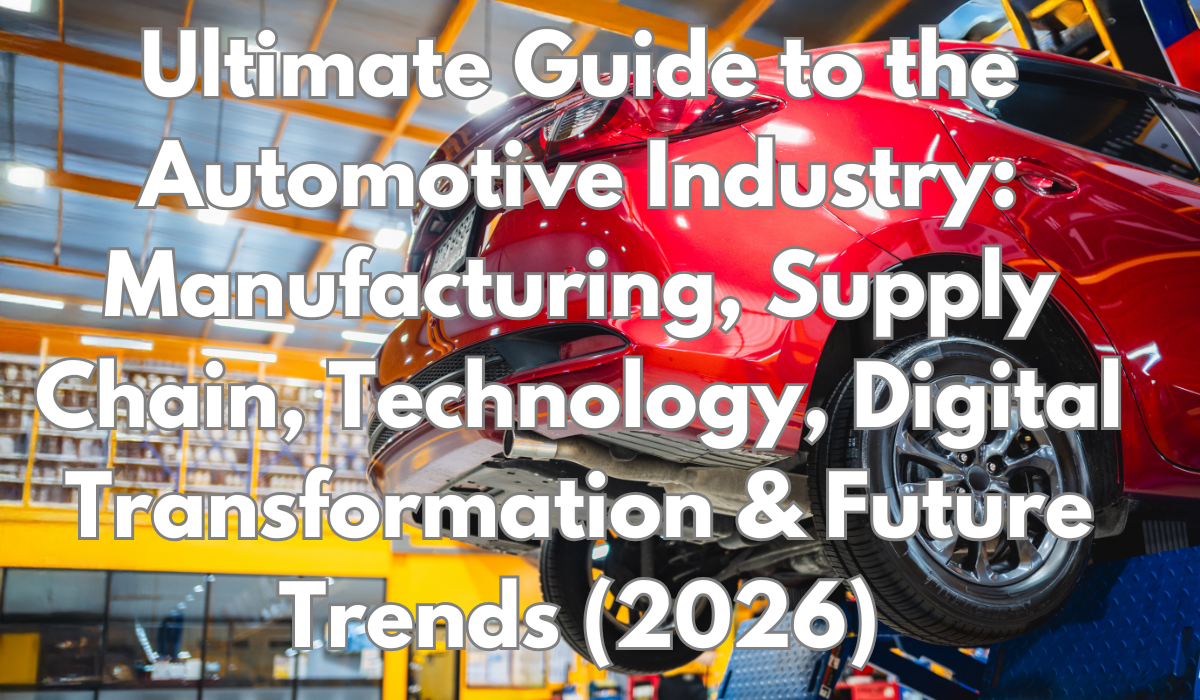
The automotive industry is one of the world’s most complex and transformative sectors. It sits at the intersection of manufacturing, engineering, electronics, software, logistics, sustainability, and customer experience. In 2026, the industry is undergoing one of the biggest transitions in its history—moving from traditional internal combustion vehicle production to a digitally driven, software-defined, electrified mobility ecosystem.
From OEMs and Tier-1 suppliers to EV battery manufacturers, connected vehicle platforms, and autonomous driving innovators, the automotive value chain is evolving rapidly. AI, robotics, digital twins, predictive maintenance, and smart factories are no longer future concepts—they are active drivers of competitiveness today.
This ultimate guide explores the automotive industry in depth, covering manufacturing, supply chains, technology transformation, and future trends shaping 2026 and beyond.
1) What Is the Automotive Industry?
The automotive industry includes all businesses involved in:
- Vehicle design
- Engineering
- Manufacturing
- Assembly
- Distribution
- Sales
- Aftermarket services
- Mobility services
It covers multiple vehicle categories:
- Passenger cars
- Commercial vehicles
- Trucks
- Buses
- Electric vehicles (EVs)
- Hybrid vehicles
- Two-wheelers (in many regional markets)
- Autonomous vehicles
- Fleet and mobility platforms
The ecosystem typically includes:
OEMs (Original Equipment Manufacturers)
These are the companies that manufacture vehicles under their own brands.
Examples include global players such as:
- Toyota
- Volkswagen
- Hyundai
- Ford
- General Motors
- Tata Motors
- Mahindra
Suppliers
These companies manufacture components and systems.
Examples:
- Engines
- Batteries
- ECUs
- infotainment systems
- braking systems
- seats
- lighting
Dealers and Distributors
Responsible for sales and customer relationship management.
Aftermarket Providers
Maintenance, spare parts, repair, and accessories.
Mobility & Technology Providers
Software, connected vehicle systems, telematics, AI, and autonomous technologies.
In 2026, this sector increasingly overlaps with the software and semiconductor industries.
2) Automotive Industry Value Chain
The automotive value chain is highly interconnected.
a) Research & Product Development
This includes:
- vehicle concept design
- CAD modeling
- simulation
- crash testing
- battery design
- embedded software development
AI-driven simulation and digital twin environments are increasingly reducing time-to-market.
b) Procurement & Supplier Management
Automotive manufacturing depends heavily on suppliers.
Supplier tiers include:
Tier 1
Direct suppliers to OEMs
Examples:
- Bosch
- Denso
- Continental
Tier 2
Suppliers to Tier 1 companies
Examples:
- metal casting firms
- chip manufacturers
- wiring harness companies
Tier 3
Raw material suppliers
Examples:
- steel
- aluminum
- rubber
- lithium
- cobalt
c) Manufacturing & Assembly
This includes:
- body shop
- paint shop
- powertrain assembly
- final vehicle assembly
- testing
This is the most capital-intensive stage.
d) Distribution & Retail
Vehicles move through:
- dealer networks
- distributors
- export partners
- fleet sales channels
- online platforms
Digital retail and virtual showrooms are growing rapidly in 2026.
e) Aftermarket
Includes:
- spare parts
- servicing
- warranties
- upgrades
- connected services subscriptions
The aftermarket is becoming a major profit center.
3) Automotive Manufacturing in 2026
Manufacturing is the backbone of the automotive industry.
The sector is now moving toward smart manufacturing and Industry 4.0.
Traditional Manufacturing Flow
The vehicle production process typically includes:
Stamping
Metal sheets are pressed into panels.
Examples:
- doors
- roof
- hood
- fenders
Welding / Body Shop
Robotic arms weld components into vehicle structures.
Automation levels are extremely high.
Paint Shop
One of the most expensive manufacturing stages.
Includes:
- anti-corrosion coating
- primer
- paint
- finishing
Assembly Line
Components are integrated.
Examples:
- engine / motor
- dashboard
- seats
- electronics
- tires
- battery pack
Quality Testing
Includes:
- road simulation
- emission checks
- sensor calibration
- ADAS validation
Smart Factory Transformation
Modern automotive plants now use:
- industrial IoT sensors
- robotics
- AI quality inspection
- machine vision
- digital twins
- predictive maintenance
AI copilots and smart maintenance assistants are already reducing downtime in plants.
This is significantly improving:
- OEE (overall equipment effectiveness)
- defect reduction
- throughput
- maintenance efficiency
4) Automotive Supply Chain
The automotive supply chain is among the most complex in the world.
A single car can contain 20,000 to 30,000 parts sourced globally.
This includes:
- metals
- semiconductors
- plastics
- sensors
- batteries
- glass
- electronics
Why Supply Chain Matters
A delay in one component can stop an entire production line.
This became highly visible during:
- semiconductor shortages
- geopolitical disruptions
- logistics crises
- tariff changes
In 2026, supply chain resilience is among the top CEO priorities.
Key Supply Chain Challenges
Semiconductor Dependency
Modern vehicles rely heavily on chips.
Used in:
- engine control
- infotainment
- ADAS
- sensors
- battery management systems
EV Raw Material Risks
EV manufacturing depends on:
- lithium
- nickel
- cobalt
- rare earth elements
Supply diversification is now strategic.
Global Sourcing Complexity
Automotive companies often source parts from multiple countries.
This introduces risks related to:
- tariffs
- customs delays
- political instability
- transport bottlenecks
Digital Supply Chain Trends
Key technologies include:
- real-time visibility platforms
- AI demand forecasting
- digital twin logistics
- predictive supplier risk analytics
- blockchain traceability
These systems improve resilience and agility.
5) Technology Transformation in Automotive
The industry is rapidly shifting from mechanical engineering to software-led innovation.
a) Electrification
EV adoption continues to accelerate.
This includes:
- BEV (Battery Electric Vehicles)
- PHEV (Plug-in Hybrid)
- Hybrid systems
Battery plants and gigafactories are major strategic investments in 2026.
Key technologies include:
- battery management systems
- fast charging
- thermal management
- energy optimization
b) Connected Vehicles
Modern cars are connected digital devices.
Capabilities include:
- GPS
- remote diagnostics
- OTA updates
- driver behavior analytics
- predictive maintenance
Connected car data is becoming a revenue stream.
c) ADAS & Autonomous Systems
Advanced Driver Assistance Systems include:
- lane assist
- adaptive cruise control
- parking assist
- collision avoidance
Autonomous driving R&D continues to expand.
This depends on:
- LiDAR
- radar
- computer vision
- edge AI
d) Software Defined Vehicles (SDV)
One of the biggest trends in 2026.
Vehicles are increasingly software-driven.
Features can now be updated after purchase through:
- OTA software updates
- subscription-based upgrades
- feature unlocks
Examples:
- performance modes
- infotainment upgrades
- ADAS enhancements
6) Digital Transformation in the Automotive Industry
Digital transformation is no longer optional.
It spans the full value chain.
Manufacturing Digitization
Plants are adopting:
- MES platforms
- ERP integration
- AI-based maintenance
- robotics orchestration
- edge analytics
Private 5G networks are increasingly used in plants for low-latency industrial communication.
Supply Chain Digitization
AI-driven platforms help with:
- supplier risk scoring
- demand sensing
- route optimization
- inventory planning
Customer Experience Digitization
Customers now expect:
- online vehicle configuration
- virtual showroom experiences
- instant financing
- digital service booking
Digital-first dealership models are growing.
Enterprise AI Adoption
Automotive leaders are heavily investing in AI.
Around 70% plan significant AI budget allocation.
Use cases include:
- predictive quality
- production planning
- autonomous inspection
- customer analytics
- warranty fraud detection
7) Sustainability & ESG in Automotive
Sustainability is a major driver in 2026.
Focus areas include:
- EV transition
- carbon-neutral manufacturing
- battery recycling
- green logistics
- circular supply chains
Governments worldwide are pushing decarbonization initiatives.
Manufacturers are investing in:
- renewable-powered plants
- recycled materials
- closed-loop battery recovery
8) Future Trends Shaping Automotive (2026 and Beyond)
1. AI-Powered Manufacturing
AI is moving from pilots to enterprise-scale deployment.
This includes:
- autonomous quality control
- line optimization
- root cause diagnostics
2. Software Defined Vehicles
Software will become a major revenue stream.
Expect subscription monetization models.
3. EV Ecosystem Expansion
Charging infrastructure, battery plants, and grid integration will expand rapidly.
4. Autonomous Mobility
Robotaxis, fleet automation, and smart logistics vehicles will grow.
5. Industry Collaboration
Joint ventures between automakers and technology companies are increasing.
Recent example: Stellantis and Microsoft’s AI partnership.
9) Challenges Facing the Automotive Industry
Key industry challenges include:
- rising production costs
- raw material volatility
- EV profitability pressure
- chip dependency
- cybersecurity risks
- workforce skill shortages
Cybersecurity is especially critical for connected vehicles.
10) Conclusion
The automotive industry in 2026 is transforming faster than ever.
What was once a manufacturing-driven sector is now becoming a software-enabled, AI-powered, data-centric mobility ecosystem.
Success in the coming years will depend on:
- manufacturing agility
- resilient supply chains
- digital transformation
- EV innovation
- software monetization
- sustainable operations
For manufacturers, suppliers, technology providers, and consulting firms, this is one of the biggest growth opportunities of the decade.
-
May 28, 2026 How to Connect a Domain to Your Linux Server
-
May 28, 2026 How to Install WordPress on Linux Hosting
-
May 28, 2026 How to Install WordPress on Linux Hosting
-
May 28, 2026 How to Install WordPress on Linux Hosting