
 English











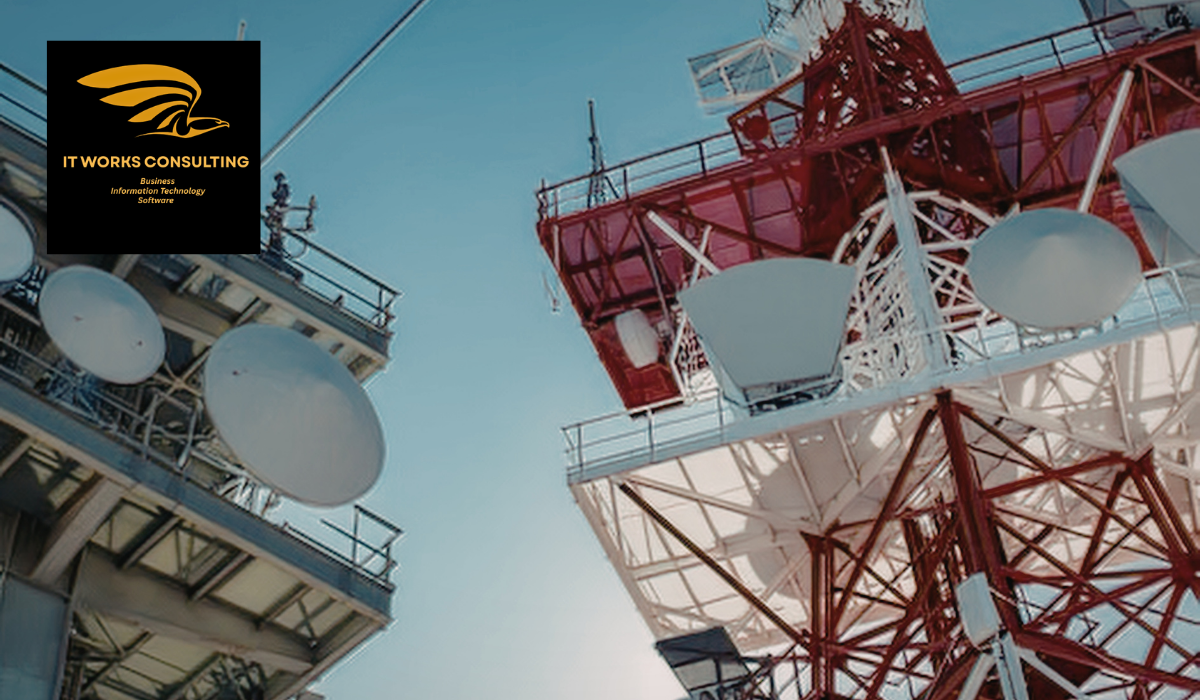
The telecommunications industry is one of the foundational pillars of the modern digital economy. It enables communication, connectivity, and data exchange across individuals, businesses, and governments worldwide. From enabling simple voice calls to supporting complex digital ecosystems like cloud computing, artificial intelligence, and the Internet of Things (IoT), telecom plays a critical role in economic growth and societal development.
At its core, the telecom industry can be broadly divided into three key segments: Wireless (Mobile Communications), Broadband (Fixed-Line Internet), and Satellite Communications. Each of these segments has unique technologies, infrastructure requirements, business models, and growth drivers, yet they are increasingly converging to create seamless connectivity experiences.
This article provides an in-depth exploration of these three segments, examining their structure, technologies, market dynamics, challenges, and future trends.
1. Wireless Segment (Mobile Communications)
1.1 Overview
The wireless segment is the most visible and widely used part of the telecom industry. It includes mobile voice services, mobile data services, and value-added services delivered over cellular networks. With billions of mobile subscribers globally, wireless communication has become the primary mode of connectivity for individuals and businesses.
Major telecom operators such as Verizon Communications, Bharti Airtel, and China Mobile dominate this segment.
1.2 Evolution of Wireless Technology
Wireless communication has evolved through multiple generations:
- 1G (Analog) – Basic voice communication
- 2G (Digital) – Introduction of SMS and better voice quality
- 3G – Mobile internet and multimedia services
- 4G LTE – High-speed data, streaming, and app ecosystems
- 5G – Ultra-fast speeds, low latency, and support for IoT and smart technologies
5G represents a transformative leap, enabling applications like autonomous vehicles, smart cities, and augmented reality.
1.3 Key Components of Wireless Networks
Wireless telecom infrastructure consists of:
- Radio Access Network (RAN) – Connects devices to the network via cell towers
- Core Network – Handles routing, authentication, and data management
- Spectrum – Licensed frequencies used for communication
- Backhaul – Connects cell sites to the core network
1.4 Services Offered
Wireless operators provide a range of services:
- Voice calling
- SMS and MMS
- Mobile internet/data plans
- Roaming services
- Value-added services (VAS) such as streaming, gaming, and mobile payments
1.5 Business Models
Wireless telecom companies generate revenue through:
- Subscription plans (prepaid and postpaid)
- Data usage charges
- Enterprise solutions
- Bundled services (e.g., OTT platforms)
The shift from voice to data has significantly changed revenue models, with data services now contributing the majority of income.
1.6 Growth Drivers
Key drivers of the wireless segment include:
- Increasing smartphone penetration
- Expansion of 5G networks
- Rising data consumption (video streaming, social media)
- Growth of IoT devices
- Digital transformation across industries
1.7 Challenges
Despite strong growth, the wireless segment faces several challenges:
- High infrastructure costs for 5G deployment
- Spectrum licensing expenses
- Intense competition and price wars
- Network congestion and quality issues
- Regulatory pressures
1.8 Future Trends
The future of wireless telecom will be shaped by:
- 5G expansion and 6G research
- Edge computing integration
- Private 5G networks for enterprises
- AI-driven network optimization
- Massive IoT connectivity
2. Broadband Segment (Fixed-Line Internet)
2.1 Overview
The broadband segment refers to high-speed internet services delivered through fixed-line infrastructure. It includes technologies such as fiber-optic networks, DSL (Digital Subscriber Line), and cable broadband.
Broadband is essential for households, businesses, and governments, supporting activities like remote work, online education, e-commerce, and cloud computing.
Companies like Comcast, AT&T, and Reliance Jio are key players in this space.
2.2 Types of Broadband Technologies
2.2.1 Fiber Optic Broadband
- Uses light signals over fiber cables
- Offers ultra-high speeds (Gbps range)
- Highly reliable and scalable
2.2.2 DSL (Digital Subscriber Line)
- Uses copper telephone lines
- Moderate speeds
- Being phased out in many regions
2.2.3 Cable Broadband
- Uses coaxial cable networks
- Faster than DSL but slower than fiber
2.2.4 Fixed Wireless Access (FWA)
- Uses wireless technology to deliver broadband
- Emerging as an alternative to fiber in remote areas
2.3 Key Components of Broadband Infrastructure
- Access Network – Connects homes and businesses
- Core Network – Manages data traffic and routing
- Internet Backbone – Global network interconnections
- Last-Mile Connectivity – Final link to the end user
2.4 Services Offered
Broadband providers offer:
- High-speed internet access
- IPTV and digital TV services
- VoIP (Voice over Internet Protocol)
- Enterprise connectivity solutions
- Cloud and managed services
2.5 Business Models
Revenue streams include:
- Monthly subscription fees
- Bundled services (triple-play: internet, TV, voice)
- Enterprise contracts
- Data center and cloud services
2.6 Growth Drivers
The broadband segment is growing rapidly due to:
- Increasing demand for high-speed internet
- Remote work and hybrid work models
- Growth of streaming services
- Cloud computing and SaaS adoption
- Government initiatives for digital inclusion
2.7 Challenges
Key challenges include:
- High capital expenditure for fiber deployment
- Infrastructure limitations in rural areas
- Regulatory constraints
- Competition from wireless alternatives (5G FWA)
2.8 Future Trends
Broadband is evolving with:
- Expansion of fiber-to-the-home (FTTH)
- Integration with 5G networks
- Smart home and IoT applications
- Increased focus on low-latency networks
- Convergence with content platforms
3. Satellite Segment (Space-Based Communication)
3.1 Overview
The satellite telecom segment provides communication services using satellites orbiting the Earth. It plays a crucial role in connecting remote, rural, and underserved regions where terrestrial infrastructure is limited or unavailable.
Key players include SpaceX (Starlink), Intelsat, and OneWeb.
3.2 Types of Satellite Systems
3.2.1 Geostationary Orbit (GEO)
- Located ~36,000 km above Earth
- Fixed position relative to Earth
- High latency but wide coverage
3.2.2 Medium Earth Orbit (MEO)
- Located between GEO and LEO
- Lower latency than GEO
3.2.3 Low Earth Orbit (LEO)
- Located 500–2,000 km above Earth
- Low latency and high speed
- Requires large constellations of satellites
3.3 Key Applications
Satellite telecom supports:
- Broadband internet in remote areas
- Television broadcasting
- Maritime and aviation communication
- Military and defense communication
- Disaster recovery and emergency services
3.4 Infrastructure Components
- Satellites (space segment)
- Ground stations (earth segment)
- User terminals (antennas, receivers)
- Launch vehicles (for deployment)
3.5 Business Models
Satellite operators generate revenue through:
- Bandwidth leasing
- Subscription services (e.g., satellite internet)
- Government and defense contracts
- Broadcasting services
3.6 Growth Drivers
Key factors driving satellite telecom include:
- Need for global internet coverage
- Rise of LEO satellite constellations
- Increasing demand in aviation and maritime sectors
- Government investments in space technology
- Disaster resilience requirements
3.7 Challenges
Satellite telecom faces several hurdles:
- High launch and maintenance costs
- Space debris and congestion
- Regulatory and spectrum issues
- Competition from terrestrial networks
- Technical complexities
3.8 Future Trends
The satellite segment is undergoing rapid transformation:
- Growth of mega-constellations (e.g., Starlink)
- Integration with 5G and terrestrial networks
- Advances in reusable rocket technology
- Increased private sector participation
- Development of direct-to-device satellite connectivity
4. Convergence of Telecom Segments
While wireless, broadband, and satellite were traditionally distinct, they are increasingly converging:
- 5G + Fiber Integration – Fiber networks support 5G backhaul
- Satellite + Mobile Connectivity – Direct satellite-to-smartphone communication
- Hybrid Networks – Combining terrestrial and satellite infrastructure
- Cloud and Edge Computing Integration
This convergence is creating a unified, seamless connectivity ecosystem.
5. Comparative Analysis of Segments
| Feature | Wireless | Broadband | Satellite |
|---|---|---|---|
| Mobility | High | Low | Medium |
| Speed | High (5G) | Very High (Fiber) | Moderate to High |
| Coverage | Wide | Limited by infrastructure | Global |
| Latency | Low (5G) | Very Low | High (GEO), Low (LEO) |
| Cost | Moderate | High infrastructure cost | Very high initial cost |
6. Strategic Importance of Each Segment
- Wireless drives mass connectivity and consumer engagement.
- Broadband powers digital economies and enterprise operations.
- Satellite ensures global coverage and connectivity resilience.
Together, they form a comprehensive communication ecosystem.
7. Conclusion
The telecom industry’s three key segments—wireless, broadband, and satellite—each play a vital role in enabling global communication. While wireless dominates in terms of user adoption and mobility, broadband provides the backbone for high-speed data, and satellite ensures connectivity in areas where traditional infrastructure cannot reach.
As technology advances, these segments are no longer operating in isolation. Instead, they are converging into integrated networks that deliver seamless, high-speed, and reliable connectivity across the globe. The future of telecommunications will be defined by this convergence, driven by innovations such as 5G, fiber expansion, LEO satellites, and AI-powered networks.
For businesses, policymakers, and consumers alike, understanding these segments is crucial to navigating the rapidly evolving digital landscape.
-
May 28, 2026 How to Connect a Domain to Your Linux Server
-
May 28, 2026 How to Install WordPress on Linux Hosting
-
May 28, 2026 How to Install WordPress on Linux Hosting
-
May 28, 2026 How to Install WordPress on Linux Hosting