
 English








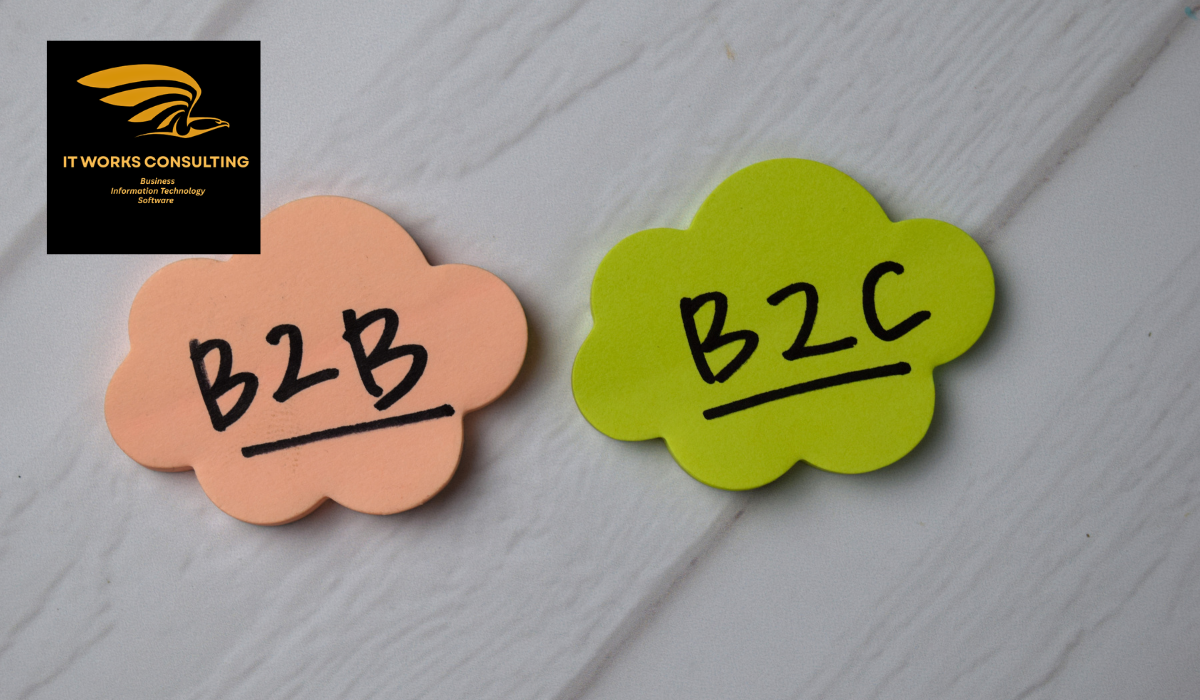
The retail industry is a vast and dynamic ecosystem that connects producers with end-users through a variety of channels, formats, and business models. At its core, retail can be broadly categorized into two primary types: Business-to-Business (B2B) and Business-to-Consumer (B2C). While both models involve the sale of goods or services, they differ significantly in terms of target customers, sales processes, pricing strategies, marketing approaches, and operational structures.
Understanding the distinction between B2B and B2C retail is essential for entrepreneurs, marketers, supply chain professionals, and business leaders. Each model presents unique opportunities, challenges, and strategic considerations. With the rapid rise of digital commerce, globalization, and data-driven decision-making, the boundaries between these two models are also evolving, creating hybrid approaches and new business possibilities.
This article explores the B2B and B2C retail industries in depth—covering definitions, characteristics, differences, examples, advantages, challenges, and future trends.
What is B2B Retail?
B2B (Business-to-Business) retail refers to transactions where one business sells products or services to another business rather than directly to individual consumers.
Key Characteristics of B2B Retail
-
Target Customers
Businesses, wholesalers, manufacturers, retailers, and institutions. -
Large Order Volumes
Orders are typically placed in bulk quantities, often at negotiated prices. -
Long Sales Cycles
Purchasing decisions involve multiple stakeholders, approvals, and evaluations. -
Relationship-Based Selling
Strong emphasis on long-term partnerships, trust, and reliability. -
Customized Pricing
Prices are often negotiated based on volume, contracts, and client relationships. -
Complex Buying Process
Involves procurement teams, technical specifications, and compliance requirements.
Examples of B2B Retail
- A manufacturer supplying raw materials to a factory
- A wholesaler selling goods to a retail chain
- Office supply companies selling to corporate clients
- Industrial equipment suppliers serving construction firms
Types of B2B Retail Models
- Wholesale Distribution – Selling goods in bulk to retailers
- Manufacturers Selling Directly to Businesses
- Online B2B Marketplaces
- Service-Based B2B Retail (e.g., IT services, logistics)
What is B2C Retail?
B2C (Business-to-Consumer) retail refers to transactions where businesses sell products or services directly to individual consumers for personal use.
Key Characteristics of B2C Retail
-
Target Customers
Individual consumers or households. -
Smaller Transaction Sizes
Purchases are typically low in volume and value compared to B2B. -
Short Sales Cycle
Buying decisions are quick and often emotionally driven. -
Mass Marketing Approach
Focus on branding, advertising, and promotions. -
Fixed Pricing
Prices are usually standardized and visible to all customers. -
High Customer Interaction
Requires strong customer service, user experience, and engagement.
Examples of B2C Retail
- Supermarkets and grocery stores
- Clothing and fashion retailers
- E-commerce platforms selling directly to consumers
- Electronics and appliance stores
Types of B2C Retail Models
- Brick-and-Mortar Stores
- E-commerce Retailers
- Direct-to-Consumer (D2C) Brands
- Subscription-Based Retail
Key Differences Between B2B and B2C Retail
1. Target Audience
- B2B: Businesses, organizations, institutions
- B2C: Individual consumers
B2B retailers cater to professional buyers with specific needs, while B2C retailers focus on general consumer preferences.
2. Buying Process
- B2B: Rational, planned, and multi-step
- B2C: Emotional, quick, and often impulsive
In B2B, decisions involve analysis, budgeting, and approvals. In B2C, decisions can be influenced by branding, pricing, and convenience.
3. Order Volume and Value
- B2B: Large orders, high transaction value
- B2C: Small orders, lower transaction value
A single B2B transaction can be worth thousands or millions, whereas B2C purchases are typically smaller.
4. Pricing Strategy
- B2B: Negotiated, flexible, contract-based
- B2C: Fixed, transparent, and standardized
B2B pricing often depends on relationships, volume discounts, and agreements, while B2C pricing is uniform.
5. Marketing Approach
- B2B: Relationship-driven, educational, value-focused
- B2C: Brand-driven, emotional, promotional
B2B marketing emphasizes ROI, efficiency, and product value, whereas B2C marketing focuses on lifestyle, experience, and appeal.
6. Sales Cycle
- B2B: Long and complex
- B2C: Short and simple
B2B transactions may take weeks or months, while B2C purchases can happen instantly.
7. Customer Relationship
- B2B: Long-term partnerships
- B2C: Transactional (but increasingly relationship-focused through loyalty programs)
8. Product Knowledge
- B2B: Requires technical expertise and detailed specifications
- B2C: Simpler product information and easy-to-understand features
9. Distribution Channels
- B2B: Direct sales, distributors, wholesalers
- B2C: Retail stores, online platforms, mobile apps
10. Decision Makers
- B2B: Multiple stakeholders (procurement, finance, management)
- B2C: Individual or family decision
Advantages of B2B Retail
-
High Revenue Potential
Large orders result in higher revenue per transaction. -
Stable Demand
Long-term contracts ensure predictable sales. -
Strong Relationships
Repeat business from loyal clients. -
Lower Marketing Costs per Sale
Focus on fewer but high-value customers. -
Custom Solutions
Ability to offer tailored products and services.
Challenges of B2B Retail
-
Long Sales Cycles
Delays in decision-making can impact cash flow. -
Complex Operations
Requires logistics, customization, and compliance. -
Dependency on Key Clients
Losing a major client can significantly impact revenue. -
High Expectations
Business clients demand reliability and quality.
Advantages of B2C Retail
-
Large Customer Base
Access to millions of potential buyers. -
Quick Sales Cycle
Faster transactions and immediate revenue. -
Brand Building Opportunities
Strong brand identity can drive growth. -
Scalability
Easier to scale through online platforms.
Challenges of B2C Retail
-
High Competition
Saturated markets with many competitors. -
Price Sensitivity
Consumers are highly price-conscious. -
Customer Retention Issues
Loyalty can be difficult to maintain. -
High Marketing Costs
Requires continuous advertising and promotions.
Digital Transformation in B2B and B2C Retail
B2B Digital Evolution
Traditionally, B2B relied on offline processes, but now digital platforms are transforming the landscape:
- Online procurement systems
- B2B e-commerce platforms
- Automated supply chain management
- Data analytics for demand forecasting
B2C Digital Evolution
B2C has been revolutionized by:
- E-commerce platforms
- Mobile shopping apps
- Social media marketing
- AI-driven personalization
The Rise of Omnichannel Retail
Both B2B and B2C retailers are adopting omnichannel strategies to provide seamless customer experiences across multiple touchpoints.
Examples
- Online ordering with in-store pickup
- Mobile apps integrated with physical stores
- Customer support across chat, email, and phone
Omnichannel retail blurs the line between B2B and B2C, especially as businesses expect consumer-like experiences.
Hybrid Models: B2B2C and D2C
B2B2C (Business-to-Business-to-Consumer)
In this model, a business sells through another business to reach the end consumer.
Example: A manufacturer selling through a retailer who sells to customers.
D2C (Direct-to-Consumer)
Manufacturers bypass intermediaries and sell directly to consumers.
Benefits:
- Higher margins
- Direct customer insights
- Strong brand control
Supply Chain Differences
B2B Supply Chain
- Focus on bulk logistics
- Long-term contracts with suppliers
- Predictable demand patterns
B2C Supply Chain
- Focus on last-mile delivery
- Inventory optimization for fast-moving goods
- Demand variability and seasonality
Customer Experience: B2B vs B2C
B2B Experience
- Personalized service
- Account management
- Technical support
- Custom pricing and solutions
B2C Experience
- User-friendly interfaces
- Fast checkout processes
- Easy returns and refunds
- Engaging brand experience
Technology in Retail
Key Technologies in B2B
- ERP systems
- CRM platforms
- E-procurement tools
- AI-driven analytics
Key Technologies in B2C
- E-commerce platforms
- Recommendation engines
- Digital payment systems
- Customer data platforms
Global Trends Shaping B2B and B2C Retail
-
E-commerce Growth
Both B2B and B2C are rapidly moving online. -
Personalization
Data-driven insights enable tailored experiences. -
Sustainability
Consumers and businesses demand eco-friendly practices. -
Automation and AI
Improving efficiency and decision-making. -
Globalization
Expanding markets and cross-border trade.
Future Outlook
The future of retail lies in convergence. B2B companies are adopting B2C-like experiences, while B2C companies are leveraging B2B efficiencies.
Key Future Developments
- Increased use of AI and machine learning
- Expansion of digital marketplaces
- Greater focus on customer experience
- Integration of supply chains with real-time data
- Rise of subscription-based and service-driven models
Conclusion
B2B and B2C retail industries, while fundamentally different, are interconnected parts of the global commerce ecosystem. B2B focuses on building long-term relationships, handling large transactions, and delivering customized solutions. B2C, on the other hand, emphasizes speed, convenience, branding, and customer engagement.
As digital transformation accelerates, the gap between these two models continues to narrow. Businesses are adopting hybrid approaches, leveraging technology, and focusing on delivering seamless experiences across all customer segments.
Understanding the nuances of B2B vs B2C retail is essential for navigating today’s competitive landscape. Whether you are a business owner, marketer, or industry professional, recognizing these differences—and knowing how to leverage them—can unlock significant growth opportunities in the evolving retail world.
-
May 28, 2026 How to Connect a Domain to Your Linux Server
-
May 28, 2026 How to Install WordPress on Linux Hosting
-
May 28, 2026 How to Install WordPress on Linux Hosting
-
May 28, 2026 How to Install WordPress on Linux Hosting